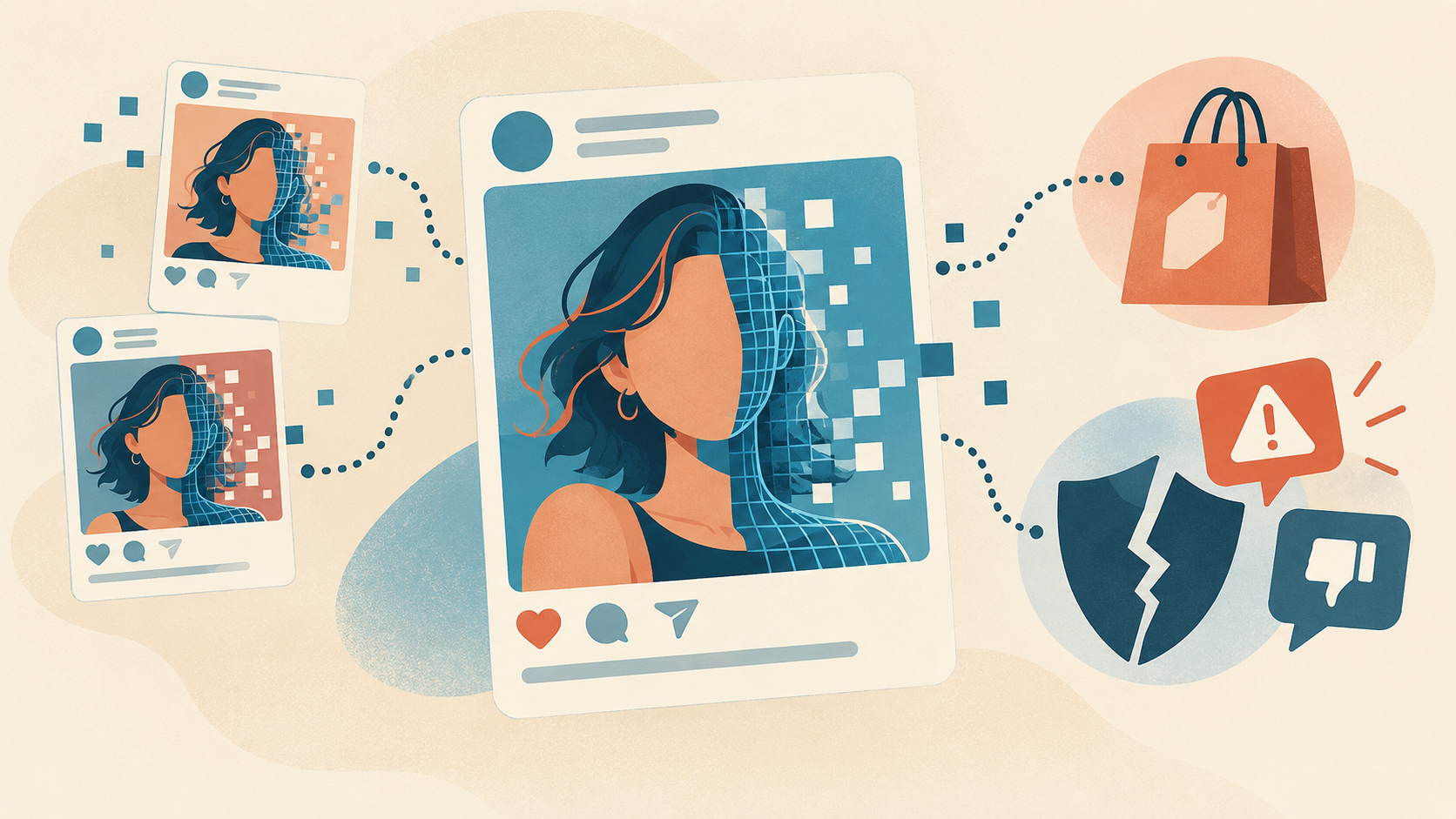
Earlier this year, a post from a social media account with over 779,000 followers accused a small Ohio trucking school of recruiting immigrants through foreign-language ads. That single post triggered a cross-platform targeted harassment campaign involving hundreds of replies tagging government officials alongside calls for investigation, users circulating the company owner’s name, business address, and contact information, and attempts to flood the company with fake reviews. Within days, the school deleted its social media presence entirely. Alethea documents these incidents to analyze coordinated amplification dynamics, not to assess the validity of the underlying claims. Whether or not the underlying claims in a given campaign are accurate, the speed and scale of the resulting harm often outpaces any fact-finding.
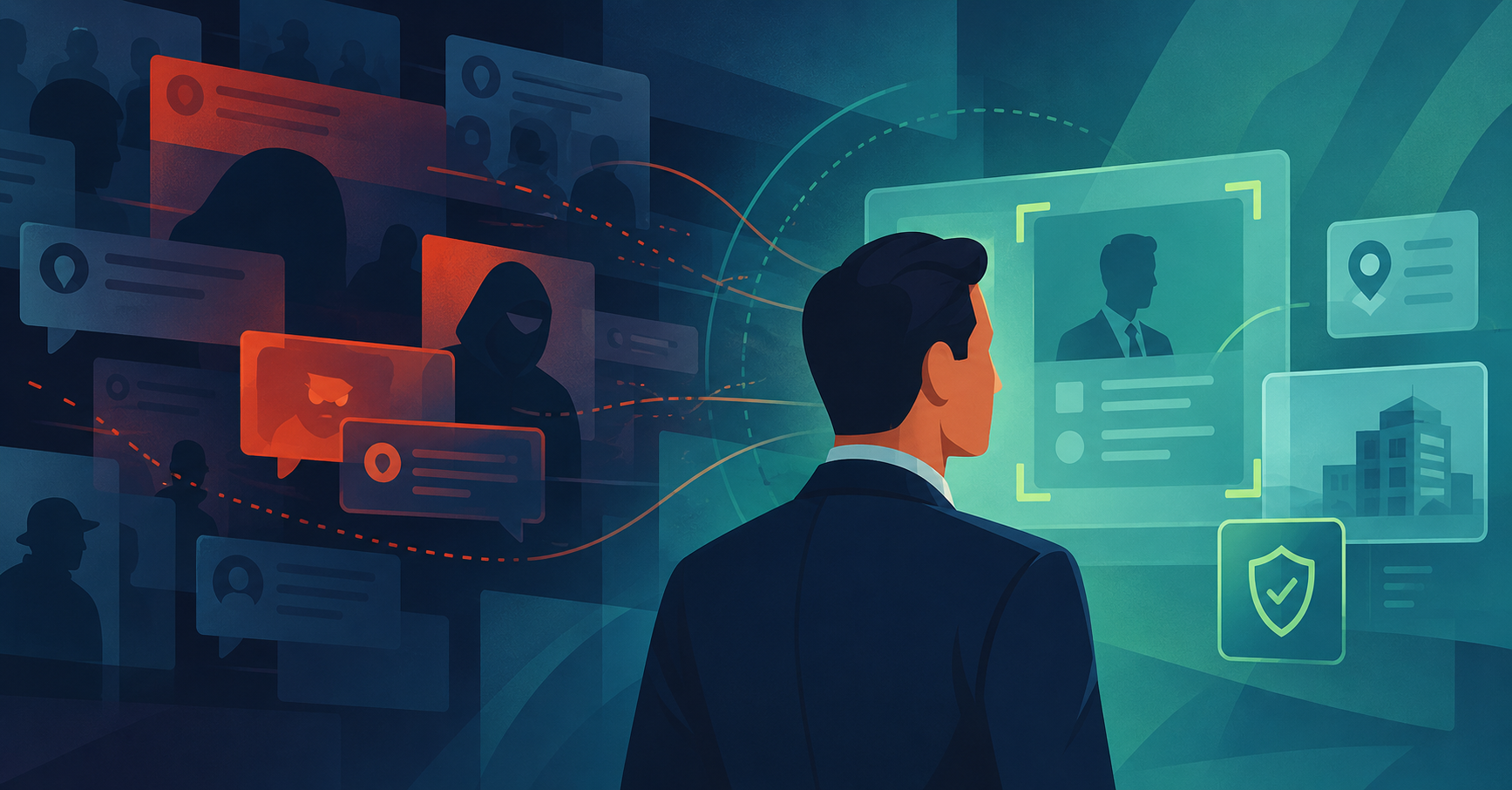
The original post came from an account within a growing class of independent, self-described journalists, or “investigative influencers”. Once a niche corner of the media ecosystem, investigative influencers have become a material source of reputational, regulatory, financial, and physical security risk for companies and organizations across all industries. Their content has been sufficient to trigger large-scale scrutiny of a company’s hiring practices, freeze billions in government funding, elevate calls to boycott product lines, and expose employees to coordinated harassment, all before any fact has been verified or a thorough audit conducted.
Why Investigative Influencers Have Taken Hold
This model isn’t entirely new; confrontational, guerrilla-style reporting has existed for decades, including notably with Project Veritas. What has changed in recent years is the infrastructure: accounts can now accrue hundreds of thousands of followers and receive credentialing that treats them as press without the editorial oversight, legal review, or institutional accountability that governs traditional journalism. Further, accounts tend to be ideologically driven and attract ideologically aligned followers.
American trust in mass media has eroded significantly in the past decade, creating an audience primed to seek alternative sources of information. Low-cost, easily accessible publishing infrastructure on social media platforms such as X, Substack, and YouTube has created a steady supply of user-led investigations to fill that demand, the vast majority of which operate without the editorial oversight, legal review, or fact-checking that governs traditional media. When a high-follower account or a public official reposts an investigative influencer’s claims, it lends those claims credibility, regardless of whether the underlying facts have been verified, with the resulting damage typically outpacing any rebuttal.
Tactics and Organizational Impact
Investigative influencers follow recognizable patterns. While the targets and topics vary, Alethea has identified a consistent playbook that organizations should understand before deciding the best mitigation strategy.
- Undercover and ambush-style reporting: Investigative influencers frequently conduct unannounced, on-site investigations. They film employees, facilities, and operations either without consent or by obfuscating their intent. There is also seemingly no outreach or prior notice to give the targeted organization time to prepare a response. This format is designed to capture unguarded moments and reframe routine business practices, out of context, as evidence of misconduct.
- Strategic narrative framing: Investigative influencer campaigns are rarely presented as opinion or commentary. Content is packaged as a breaking investigation, framed around narratives of corruption, systemic fraud, or urgent threats to public safety. The language used is deliberate, creating a sense of crisis to generate engagement and amplify perceived legitimacy, even when the underlying claim is unsubstantiated. While these campaigns seem spontaneous, they are often strategically timed to coincide with a major news event, a government initiative, or an offline action that provides a ready-made context.
- Government and official tagging: Content routinely tags or calls for followers to tag federal agencies, government officials, or law enforcement to frame the investigation as a call for regulatory action. This converts online attention into real-world consequences when tagged officials respond. In one incident Alethea observed, an individual was arrested by immigration authorities following an on-camera encounter filmed by an investigative influencer/ The individual has publicly attributed the arrest to the video’s circulation.
- Personal exposure: While investigative influencer content does not always constitute doxxing under platform policy definitions, individual employee faces, business addresses, and contact details are frequently visible in published footage and posts. Regardless of intent, this creates conditions for direct harassment and physical security risks for personnel and facilities.
- Ingroup vs. outgroup framing: Investigative influencers routinely structure investigations around a clear moral divide or two opposing ‘sides,’ framing targeted organizations or individuals as acting against the interests of a sympathetic group—most often taxpayers, customers, or local communities, with immigrants or noncitizen workers frequently cast as the outgroup. This transforms routine business practices into high-stakes grievances and expands audience engagement by lowering the threshold for coordinated action.
What’s at Stake
Investigative influencer campaigns generate risk across four dimensions—reputational, regulatory, financial, and physical security—and no sector is immune. Direct targets are not the only ones exposed: a contract, grant, or partnership with a targeted organization can be enough to pull adjacent entities into the same campaign.
- Reputational Risk: This is often the most immediate and visible category. A targeted organization can face thousands of social media posts, coordinated negative review campaigns, and direct harassment of employees within days of an initial post. Unlike traditional media, where corrections can travel through the same channels as the original story, investigative influencer content spreads through algorithms and communities with no equivalent mechanism for retractions, meaning the original claim continues to circulate long after it has been refuted. Even when corrections are made via replies or community notes, they aren’t impactful because there is no guarantee the original audience is shown the correction in their algorithm.
- Regulatory and Government Risk: This is a frequently overlooked vector. Alethea has observed multiple cases in which government officials were tagged in investigative influencer posts and, in some cases, cited the claims directly in official communications and legislative proceedings. In one case, a high-reach investigative influencer’s probe was cited by senior government officials when freezing more than $10 billion in federal welfare funding. For organizations that receive government funding or operate in highly regulated industries—healthcare, social services, food and consumer goods—the threshold for scrutiny has been dramatically lowered by social media.
- Financial Risk: This can manifest quickly through boycotts, withdrawn partnerships, and stock or brand damage. Nonprofit organizations face a variant in which users pressure major donors or grantmaking foundations to pull their financial support.
- Physical Security Risk: This is the most direct consequence for personnel. Business addresses, contact information, and employee details are frequently shared as part of, or in reaction to, these campaigns. Escalating rhetoric in comment sections and on niche platforms can translate into offline activity at physical locations and, in the most serious cases, in-person confrontations.
How Organizations Can Prepare
Effective preparation can begin before any campaign is underway. High-reach investigative influencers tend to set the agenda for the broader ecosystem, while lower-reach accounts frequently pile onto established narratives to build their own following. Monitoring the themes and sectors these key actors are actively targeting gives organizations early warning of where scrutiny is heading, even before they appear in any post. An organization that knows a prominent investigative influencer has been targeting others in its industry can stress-test its vulnerabilities and prepare responses well in advance.
If a campaign does emerge, speed matters. Early detection is essential for proactive risk mitigation. This involves identifying a campaign at the initial-post stage, tracking cross-posting on mainstream and niche platforms, and understanding the reach and impact of the investigative influencer posting the initial claim. By the time investigative influencer campaigns go viral, the window for meaningful mitigation shrinks considerably.
Teams should develop holding statements for their most likely attack vectors, including but not limited to: hiring practices, funding sources, ingredient or product claims, and executive backgrounds, so that responses are ready before they are needed. Organizations should also proactively audit public-facing content that could be used as footholds by a motivated investigative influencer. Security teams should pay particular attention to what personally identifiable information (PII) is available online for high-profile personnel, and have security protocols in place for office, retail, or factory buildings, should addresses get circulated online.
Engaging directly with false or inflammatory claims on social media can backfire and elevate the content or generate a second wave of attention from communities and stakeholders who were not yet aware of it. The calculus for engagement requires visibility into who is driving the narrative, the wider historical context of the claim, which platforms it is spreading on, and what the realistic amplification trajectory looks like.
Conclusions
Investigative influencers are not a passing phenomenon. As they gain followers and lower their threshold for targeting, more organizations will find themselves in the crosshairs. The organizations best positioned will invest in early warning, map the actors and platforms involved, and build response infrastructure before the camera turns toward them. Alethea's work focuses on coordinated inauthentic activity and the downstream harms of viral campaigns, not on the editorial judgment of any individual creator.
To get a better understanding of your organization's risk exposure, reach out to us.
Share this story: