

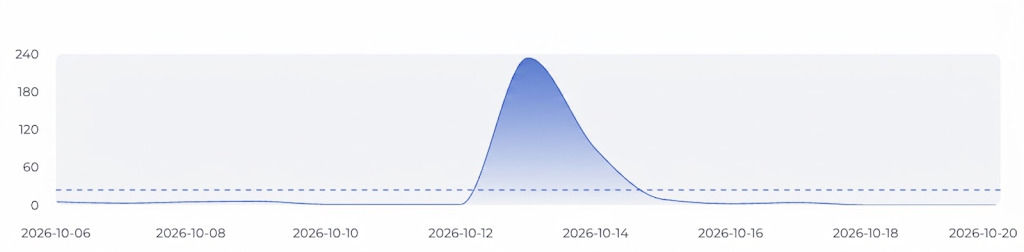
Moderna co-founder Noubar Afeyan’s October 13 call for “urgent” AI agent regulation before a biomedical disaster sparked a wave of skeptical commentary from social media users interpreting the move as an attempt to protect Moderna’s profits and keep its AI-discovered “cures” from the public. Prediction market Polymarket’s (2M followers) high-engagement October 13 X post amplified Afeyan’s comments and spurred claims that Afeyan is truly concerned about revenue loss.
Key points
- Users Recast Warning as Moderna Protecting Its Profits: X posts by self-identified streamer Ian Crossland (139.4K followers), low-reach tech futurist @Dr_Singularity (88.8K followers), and individual X users accused Afeyan of being “afraid” of AI making proprietary products open source, claimed “cures for diseases might leak to the public and cut into [Moderna’s] ‘sick care’ profits” and joked that “It would be a ‘disaster’ for moderna if their patents are released and improved upon by SI.” Notably, a related argument was advanced by a small volume of pro-AI and AI accelerationists, who accused Moderna and other companies like JPMorgan, OpenAI, and Anthropic of leveraging AI-related safety concerns to conceal their attempts to block competitors.
- Conspiracy Theorists Tie Warning to COVID-19 and a Planned Outbreak: Dozens of conspiratorial posts connected Afeyan’s comments to Moderna’s COVID-19 vaccines and accused Afeyan of staging a "biomedical disaster” to sell its products, referencing a “manipulated super bug that we [would] need experimental gene therapy for.” At least two X users speculated that “the narrative for the next pandemic will be AI agents” and declared an “AI False Flag is imminent.” At least one Gab user claimed that “the ELITE that want to us [sic] AI to spy on you and control your life” out of fear of “People using AI to do LOGIC to determine if Pharma is lying.”
What it means
This content underscores the reputational and regulatory risks that pharmaceutical executives face in making public commentary on AI use and policy. This is consistent with broader cross-industry scrutiny of executives’ AI safety warnings, which online communities are interpreting as a concealed promotion of self-interest. In the case of pharmaceutical companies, these claims are embedded within long-standing conspiracies that “Big Pharma” intentionally withholds cures from the general public or is colluding with regulators. At the same time, promoting the benefits to the industry in the form of AI-assisted drug or vaccine development could feed conspiracy claims that the industry is setting up the next “biomedical disaster.”